Core Stability Is Not What You Think
Most of us grow up thinking the core means abs. The six pack. Crunches. Sit ups. Maybe planks if we are feeling advanced. If you played sports you probably remember a coach telling everyone to drop down and do fifty sit ups before practice. For a long time that was the entire story.
It took me a very long time to realize that story was incomplete.
I did a lot of core work growing up. Then I did even more after I hurt my back. At the time it made sense. If your back hurts you strengthen your abs. That is what everyone says. So I kept doing more of the same movements. More crunching. More bending. More trying to make the front of my stomach stronger.
I worked my core so much that I never really felt good in my hips. Looking back it almost felt like it was contributing to my problem instead of solving it.
But something about it never fully clicked. I could make my abs tired. I could feel the burn. I could check the box that said I trained my core. And yet my body still felt fragile and unpredictable in certain movements. It felt like I was missing the bigger picture.
The shift started when I began paying attention to how people actually move in the real world. Not in a gym. Not lying on the floor. But running, throwing, skiing, jumping, cutting, carrying kids, reaching overhead, doing life. When you watch movement like that you notice something quickly. The torso is almost never moving in big dramatic crunching motions. Instead it looks quiet. Stable. Organized. Everything else is moving around it.
That observation changed everything for me.
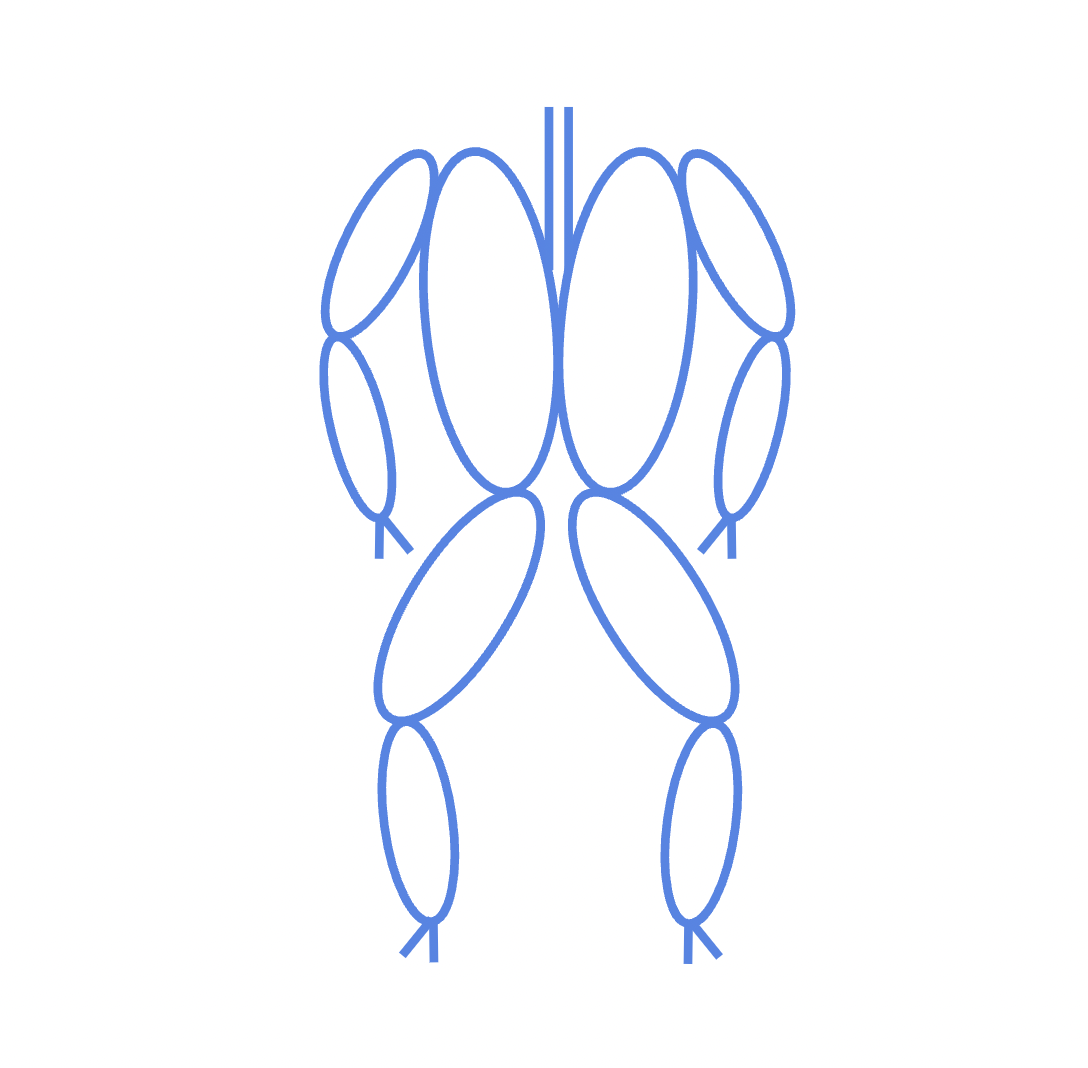
We tend to picture the core as a panel on the front of the body. But anatomically it wraps all the way around you. Front. Sides. Back. Top. Bottom. It is more like a cylinder than a panel. More like a soda can than a hinge.
Think about a soda can for a second. When it is sealed and pressurized you can stand on it. You can stack weight on top of it. It holds shape because pressure spreads the load across the walls. But the moment you release the pressure or dent the side it collapses easily. The structure did not change. The pressure did.
Your torso works in a very similar way. The muscles of the abdomen, the sides of the body, the muscles along the spine, the diaphragm on top and the pelvic floor on the bottom all work together to create pressure inside the trunk. That pressure stiffens the spine and gives the body a stable center.
Once you see the core this way it stops being about the front of the stomach and starts being about the whole torso.
This is where the research of spine expert Stuart McGill really hit home for me. After decades studying back pain and performance he kept coming back to a simple idea. The main job of the core is not to create movement. The main job of the core is to prevent excessive movement.
That sentence sounds simple but it flips the entire crunch and sit up story upside down.
Most traditional ab exercises train the torso to bend forward over and over again. But in real life your spine rarely needs to do repeated aggressive bending. What it needs to do is hold steady while your arms and legs move around it.
Think about running. Force hits the ground and travels up the leg into the hips. From there it has to pass through the torso before it reaches the shoulders and arms. That entire transfer happens in a fraction of a second. If the torso collapses or twists uncontrollably that force leaks out. Energy disappears. Efficiency drops. Sometimes pain shows up.
The torso sits in the middle of everything. It is the bridge between the lower body and the upper body. Its job is to pass force along without losing it.
That idea helped me understand something else. The core is deeply connected to breathing. Every breath changes pressure inside the torso. The diaphragm moves down. The pelvic floor responds. The abdominal wall expands. Pressure rises and falls constantly. Stability and breathing are tied together in a way most of us never learn about.
The more I learned the more I started to see the core as a corset that wraps around the body. Not a rigid brace but a responsive one. Something that tightens and relaxes constantly as we move.
One thing I do each week now is very simple. I take a softball, lay it on the floor, and lie on top of it. I let it sink into my abs while I breathe slowly into it. I stay there for about sixty seconds, then move it slightly and do the same thing again. I move it across the stomach and to the other side. The goal is not to brace or tighten. The goal is to let the abs actually relax a bit.
Another piece of the puzzle is rotation. Humans are built to rotate. We walk with rotation. We run with rotation. We throw and swing and reach with rotation. But here is the interesting part. The torso has to resist rotation and create rotation at the same time. It has to hold steady long enough to store energy and then release that energy at the right moment.
Watch someone throw a ball. The hips start the motion. The torso stays quiet for a split second. Then it unwinds and sends that energy into the arm. All of that happens in milliseconds. The torso behaves like a spring loading and releasing.
None of that looks like a crunch.
At some point I realized that all the core work I had done was not useless. It was just incomplete. I had trained the body to move in one simple direction. But real life asks the torso to do something more subtle and more complex. Hold pressure. Transfer force. Manage rotation. Stay steady while everything else moves.
Once that idea clicks you start seeing it everywhere. In athletes. In dancers. In people who move through the world smoothly. Their torsos look calm. Their limbs look free. Stability creates freedom.
That might be the biggest shift of all. Stability does not limit movement. It makes movement possible.
Instead of thinking how do I work my abs the question becomes how does my torso help the rest of my body move. That question opens a much bigger door.
Lately I have been loving using maces because they let me explore full body connection in a really simple way. When I hold a mace with both hands and move it around my body, I can feel the connection from my hands through my torso all the way down into both feet. It becomes a way to explore tensegrity and torque and rotation across the whole system at once. Stay tuned and I will share more about this soon.